
- All
- Product Name
- Product Keyword
- Product Model
- Product Summary
- Product Description
- Multi Field Search
Views: 7 Author: Site Editor Publish Time: 2026-10-09 Origin: Site


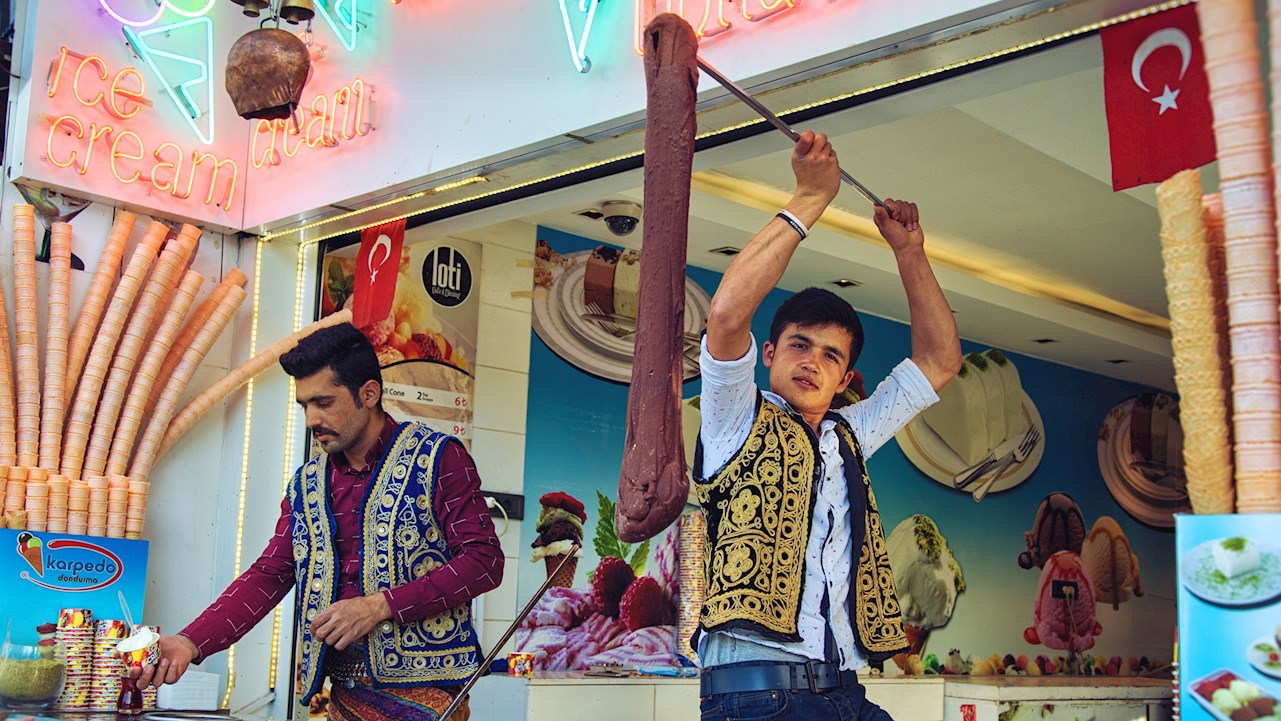
Turkish ice cream is more than a frozen dessert. Known for its stretchy texture, chewy consistency, and entertaining serving style, traditional Turkish dondurma offers a distinctive experience that can help dessert businesses stand out.
From tourist attractions and shopping malls to food festivals and specialty ice cream shops, Turkish ice cream can be sold through different business models.
However, starting a successful Turkish ice cream business requires more than purchasing a machine. Entrepreneurs must understand startup costs, ingredient requirements, equipment capacity, operating expenses, and customer demand.
This guide explains how to plan your investment, choose a suitable Turkish ice cream machine, and build a practical business model in 2026.
To start a Turkish ice cream business, you generally need suitable commercial ice cream equipment, a tested dondurma recipe, food-safe utensils, ingredient storage, a suitable selling location, and the required local food business permits.
The most important preparation steps are:
Research local customer demand and competition.
Choose between a kiosk, small shop, or larger dessert business.
Test your ice cream recipe and serving method.
Select a machine with suitable production capacity.
Calculate ingredient, labor, electricity, rent, and packaging costs.
Verify food safety requirements and equipment compatibility.
Establish reliable equipment maintenance and spare-parts support.
A small operation may start with a single-cylinder machine, while a higher-volume business may benefit from a double-cylinder configuration.
Actual equipment requirements depend on your recipe, production schedule, and expected sales volume.
Traditional Turkish dondurma is known for its characteristic texture and the theatrical presentation often associated with Turkish ice cream vendors.
Unlike ordinary scoop-and-serve ice cream, its distinctive serving style can turn a simple purchase into a memorable customer experience.
This creates opportunities for businesses located in:
Tourist attractions and pedestrian shopping streets
Shopping malls and commercial centers
Night markets and outdoor food markets
Festivals, exhibitions, and entertainment venues
Specialty dessert shops and ice cream cafés
Hotels, resorts, and seasonal attractions
The serving experience may help attract attention, but repeat purchases ultimately depend on taste, consistency, hygiene, price, and customer service.
A Turkish ice cream business can differentiate itself through traditional flavors, creative toppings, attractive presentation, and regional adaptations.
Some operators may also explore related products such as Afghan Sheeryakh or Arabic Booza. However, these products have different traditional recipes and preparation methods, so the equipment and production process should be evaluated for each application.
Business Tip: Before investing, conduct a small local market test. Customer interest in an entertaining serving experience does not automatically guarantee profitable daily sales.
Startup costs vary significantly depending on location, equipment configuration, rental requirements, import costs, and business size.
Instead of relying on a universal investment figure, calculate your expected costs in separate categories.
Expense Category | What to Consider |
|---|---|
Ice Cream Machine | Machine model, cylinder capacity, features, voltage |
Ingredients | Milk, sugar, stabilizers, salep or recipe-specific ingredients |
Serving Equipment | Scoops, spatulas, cones, food-safe containers |
Refrigeration & Storage | Refrigerators, freezers, ingredient storage |
Business Location | Rent, deposit, kiosk construction, utilities |
Shipping & Import | Freight, customs duties, local taxes |
Licensing | Food permits, inspections, business registration |
Marketing | Signage, packaging, promotions, digital advertising |
Working Capital | Labor, inventory, maintenance, unexpected expenses |
Machine price is only one part of the total investment.
For international buyers, shipping charges, customs clearance, destination-country compliance, and after-sales support should also be considered before placing an order.
Use the following formula:
Total Startup Investment = Equipment + Setup + Initial Inventory + Licensing + Logistics + Working Capital
Request a written quotation from your equipment supplier and obtain local estimates for the remaining expenses.
This approach helps prevent underestimating the true cost of opening your business.
Profitability depends on customer traffic, selling price, ingredient costs, rental expenses, labor, and the actual number of servings sold.
A busy tourist location may offer strong sales opportunities but also involve higher rent and seasonal fluctuations.
Consider the following hypothetical example in US dollars:
Item | Example Amount |
|---|---|
Selling Price per Serving | $5.00 |
Ingredients & Packaging | $1.50 |
Contribution per Serving | $3.50 |
Servings Sold per Day | 80 |
Daily Sales Revenue | $400 |
Daily Contribution Before Fixed Costs | $280 |
These figures are illustrations, not verified market averages or guaranteed earnings.
The $280 contribution must still cover rent, staff wages, electricity, taxes, equipment depreciation, maintenance, financing costs, and other operating expenses.
A useful formula is:
Break-Even Servings per Month = Monthly Fixed Costs ÷ Contribution per Serving
For example, with hypothetical monthly fixed costs of $4,200 and a $3.50 contribution per serving:
4,200 ÷ 3.50 = 1,200 servings per month
At 30 operating days per month, this equals approximately 40 servings per day to cover the assumed fixed costs.
This calculation is simplified and excludes financing, taxes, and other variable business conditions. Use your local figures when evaluating an actual investment.
Choosing suitable equipment is one of the most important decisions when starting a Turkish ice cream business.
The required equipment depends on whether you produce ice cream on-site, operate from a central kitchen, or sell pre-produced portions.
A commercial Turkish ice cream machine is designed for preparing frozen desserts using a controlled freezing and mixing process.
Before purchasing, consider:
Freezing performance under your recipe conditions
Cylinder quantity and usable capacity
Compressor and refrigeration configuration
Electrical requirements
Cleaning and maintenance procedures
Machine dimensions and installation space
Availability of replacement parts
Manufacturer support and operating instructions
Depending on the business model, you may need:
Food-grade stainless steel preparation utensils
Refrigerated ingredient storage
Suitable frozen-product holding equipment
Temperature monitoring tools
Water and cleaning facilities
Cones, cups, and food-safe packaging
Important: Do not assume the production machine can safely store finished ice cream overnight. Check the machine's actual operating specifications and use appropriate refrigerated storage where required.
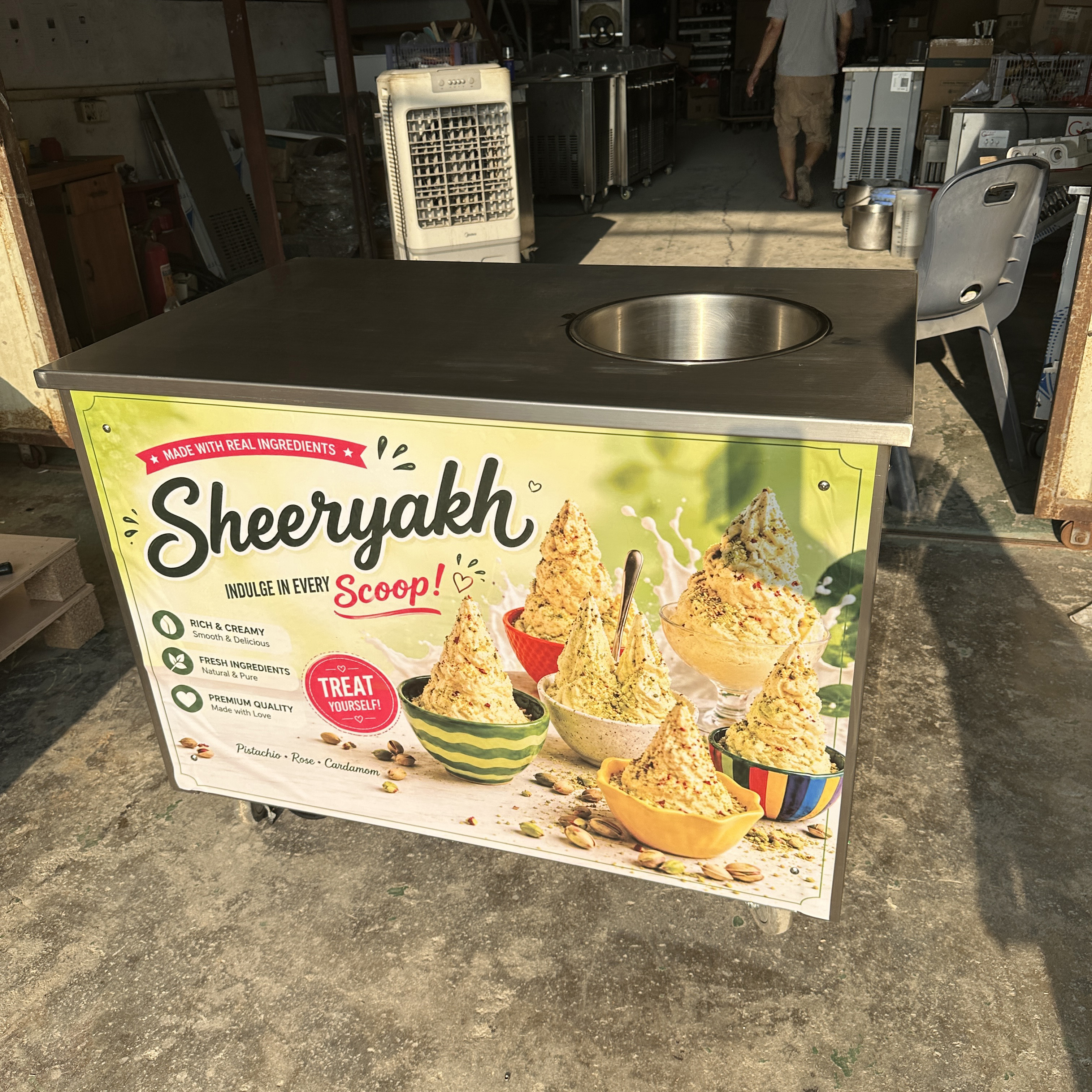
There is no single machine that suits every ice cream business.
The right choice depends on daily production demand, available space, power supply, and the recipe being produced.
Feature | Single-Cylinder | Double-Cylinder |
|---|---|---|
Typical Application | Smaller-scale production | Higher-volume or parallel production |
Production Configuration | One cylinder | Two cylinders |
Initial Investment | Generally lower | Generally higher |
Space Requirements | Model dependent | Model dependent |
Suitable Buyers | Small shops, startups | Busy shops, commercial operators |
A double-cylinder machine may provide additional workflow flexibility, but it does not automatically guarantee twice the output. Actual performance depends on the model, compressor configuration, recipe, and operating conditions.
JINLISHENG manufactures commercial Turkish ice cream equipment for different production requirements.
Its equipment range includes models such as:
TS-30: A single-cylinder configuration suited to buyers considering smaller-scale production.
TS-60: A double-cylinder configuration for operators needing two working cylinders.
TS-80: A larger double-cylinder option for businesses evaluating increased production requirements.
TS-90: A double-cylinder configuration with larger cylinders for commercial applications.
Machine specifications, dimensions, compressor options, production performance, and electrical configurations should be confirmed before ordering.
For equipment distributors, comparing different models also helps identify suitable products for different customer segments.
Looking for a Turkish ice cream machine supplier?
Contact JINLISHENG to discuss available models, cylinder sizes, electrical configurations, OEM/ODM requirements, and export quotations.
Traditional Turkish dondurma is known for its dense, elastic texture.
Its characteristic properties are influenced by the ingredient formulation, especially the use of salep in traditional recipes, as well as the preparation and freezing process.
A basic commercial workflow may involve:
Preparing a suitable ice cream formulation.
Measuring and mixing the ingredients.
Applying the required heat treatment according to the recipe and food safety process.
Cooling and aging the mixture where appropriate.
Freezing and mixing it using suitable equipment.
Evaluating the finished texture and serving consistency.
Holding the finished product at safe temperatures.
Exact processing conditions depend on the formulation, machine, and local food safety requirements.
Common factors may include:
Incorrect ingredient proportions
Inappropriate stabilizer selection
Insufficient mixture preparation
Unsuitable freezing conditions
Incorrect mixing or processing time
Recipe and equipment incompatibility
A powerful compressor alone cannot guarantee the traditional stretchy texture.
Successful results require a compatible recipe, proper temperature control, and a suitable production process.
Before investing in equipment, buyers should request a demonstration using a recipe similar to the one they intend to produce.
A lower purchase price may appear attractive, but equipment downtime, unsuitable capacity, maintenance difficulties, and unavailable spare parts can increase the long-term cost.
Compare overall operating value rather than the purchase price alone.
Different countries use different voltage, frequency, plug, and installation standards.
Confirm the required electrical configuration before production and shipping.
For example, some buyers require 110V/60Hz configurations, while others need 220V/50Hz or alternative arrangements.
Do not assume every machine supports every power configuration.
Entertainment attracts attention, but sales depend on location, product quality, and pricing.
Start with realistic demand forecasts instead of assuming a constant high sales volume.
Proper ingredient handling, equipment cleaning, refrigeration, and food safety procedures are essential.
Always follow relevant local regulations and the manufacturer's operating instructions.
Before placing an order, confirm:
Warranty terms
Spare-parts availability
Cleaning and maintenance guidance
Technical support arrangements
Shipping packaging and installation requirements
These considerations are especially important for overseas equipment buyers.
China is one potential sourcing market for commercial ice cream machinery.
For international buyers, finding a reliable manufacturer involves more than comparing online prices.
Before purchasing, request:
Detailed machine specifications
Clear product photographs and working videos
Available electrical configurations
Applicable certification documentation
Warranty and spare-parts information
Production and delivery lead times
Shipping quotations and trade terms
Instructions for operation and maintenance
Ask whether the machine has been tested with your intended recipe and whether the supplier can provide relevant production demonstration videos.
JINLISHENG is a China-based manufacturer with more than 20 years of experience in ice cream machinery.
Its product range includes Turkish ice cream machines, soft serve ice cream machines, hard ice cream machines, gelato equipment, and popsicle machines.
The company supports OEM/ODM customization and international equipment supply.
Buyers can contact the JINLISHENG team to confirm available configurations, relevant certification documents, manufacturing arrangements, and shipment options for their markets.
The required investment depends on your country, location, equipment, business model, and operating expenses. Prepare an itemized budget that includes the machine, storage equipment, premises, licensing, inventory, and working capital.
Commercial Turkish ice cream equipment typically uses a refrigeration and mixing system. The exact machine choice depends on the product formulation, batch size, and required production capacity.
Some conventional batch freezers may be able to process suitable formulations, but authentic dondurma texture depends on the recipe and production method. Verify performance with actual product trials rather than relying solely on machine descriptions.
It may be sufficient for a smaller operation, depending on the cylinder capacity, production cycle, batch demand, and sales forecast. Businesses with higher demand may consider larger or double-cylinder models.
Yes, subject to your destination country's import, electrical, and food-equipment requirements. Confirm documentation, applicable standards, shipping terms, and duties before purchasing.
JINLISHENG supports OEM/ODM requests. Available voltage, frequency, equipment configuration, and other customization options should be confirmed with the sales team for the selected model.
Compare the manufacturer's product specifications, production experience, working demonstrations, warranty conditions, technical support, spare-parts availability, and export experience.
Starting a Turkish ice cream business can be an interesting opportunity for entrepreneurs who want to combine a distinctive dessert with an engaging customer experience.
However, a successful business depends on realistic financial planning, suitable equipment, consistent product quality, and good operations.
Before purchasing a machine, identify your target customers, test your recipe, estimate demand, and calculate operating costs.
Choosing a reliable equipment manufacturer can help you make a more informed investment decision and plan for long-term maintenance needs.
JINLISHENG — Commercial Ice Cream Machinery Manufacturer in China
Whether you are opening a dessert shop, expanding your existing business, or sourcing equipment for distribution, JINLISHENG offers several Turkish ice cream machine configurations to consider.
Contact JINLISHENG for:
Turkish ice cream machine model recommendations
Single-cylinder and double-cylinder options
OEM/ODM customization inquiries
Electrical configuration consultation
Equipment specifications and working videos
International shipping quotations
Request a quotation and discuss your Turkish ice cream business equipment requirements with our team.
