- All
- Product Name
- Product Keyword
- Product Model
- Product Summary
- Product Description
- Multi Field Search
Views: 5 Author: Site Editor Publish Time: 2026-10-26 Origin: Site


What if you could turn a traditional Afghan dessert into a small business?
Imagine a little ice cream stand serving creamy, fragrant Shir Yakh topped with pistachios. Customers stop to watch the preparation, try something different, and share their experience with friends.
It sounds like an appealing business idea. But one important question comes first:
Can you actually make money selling Afghan Shir Yakh?
The answer depends on how much you invest, how many servings you sell, and how carefully you control your costs.
In this guide, we'll explore the startup expenses of a small Afghan ice cream business, compare different selling formats, calculate potential earnings, and explain how to choose suitable equipment.
Whether you're considering a weekend food stall or a permanent dessert shop, understanding the numbers is the first step.
Afghan Cooks — Traditional Sheer Yakh
An Afghan Shir Yakh business can be profitable if the selling price and sales volume are sufficient to cover ingredient costs, labor, rent, equipment expenses, and other operating costs.
For example, consider a hypothetical business selling each serving for $4, with $1.20 in variable costs.
That leaves $2.80 per serving to cover fixed expenses and potentially generate profit.
At 50 servings per day and 26 operating days per month, the business would generate $5,200 in monthly sales.
After $1,560 in variable costs and an assumed $2,500 in fixed monthly expenses, the simplified operating result would be $1,140 per month.
These figures are illustrative assumptions, not actual market averages or guaranteed earnings.
Local demand, ingredient prices, employee wages, rent, and customer traffic can produce very different outcomes.
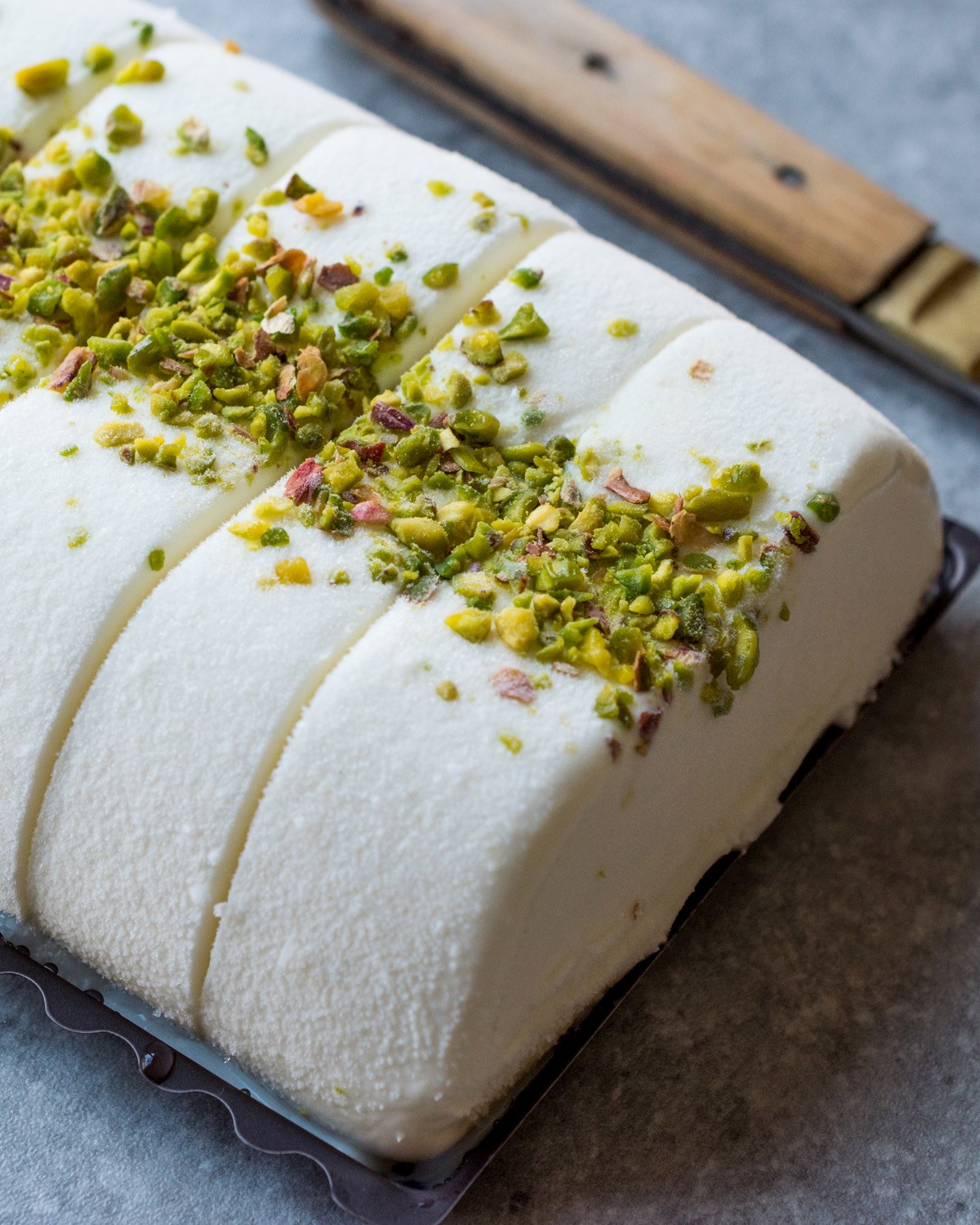
Shir Yakh, also spelled Sheer Yakh or Sheeryakh, is a traditional Afghan frozen milk dessert.
It is often flavored with ingredients such as cardamom, rosewater, saffron, and pistachios.
Its characteristic dense and creamy texture, along with its cultural background, gives it a distinctive identity.
For entrepreneurs, this creates several potential advantages.
Many desserts compete through new flavors, colorful toppings, and promotions.
Shir Yakh offers another approach: a traditional product with a recognizable cultural heritage.
A business can explain its ingredients, preparation method, and connection to Afghan cuisine.
This may appeal to Afghan communities looking for familiar foods, as well as customers who enjoy exploring international desserts.
A small Shir Yakh stand does not necessarily need a large menu.
An entrepreneur could begin with a traditional milk-and-cardamom version and introduce carefully developed variations.
A focused menu may simplify inventory management, staff training, and quality control.
Depending on local regulations and customer demand, Shir Yakh can be considered for small dessert stalls, shopping kiosks, cultural events, or permanent shops.
However, a distinctive product alone does not guarantee strong sales.
Before investing, test customer interest and compare suitable locations.
The startup budget depends heavily on your country, city, equipment choice, and business model.
A weekend market stall can have very different expenses from a permanent shop in a shopping mall.
Before estimating total investment, separate one-time setup expenses from recurring operating costs.
Expense | What to Include |
|---|---|
Commercial Ice Cream Equipment | Freezing and mixing machinery suitable for the recipe |
Refrigeration | Ingredient and finished-product storage |
Ingredients | Milk, sugar, cardamom, rosewater, nuts, and recipe-specific ingredients |
Serving Supplies | Cups, spoons, containers, napkins, and packaging |
Stall or Shop Setup | Counter, signage, display, and preparation facilities |
Licensing | Food business permits, inspections, and registration |
Shipping and Import | Freight, customs charges, and equipment delivery |
Initial Marketing | Menu design, photography, local advertising |
Working Capital | Rent, labor, inventory, and emergency expenses |
The following amounts are hypothetical planning allowances in US dollars. They are not supplier quotations or country-specific averages.
Expense Category | Example Budget |
|---|---|
Production Equipment | $1,500 |
Refrigeration and Storage | $700 |
Stall Setup and Utensils | $900 |
Initial Ingredients and Packaging | $300 |
Permits and Setup Fees | $300 |
Launch Marketing | $200 |
Contingency | $600 |
Example Setup Subtotal | $4,500 |
This example does not include a substantial rental deposit, extensive construction, international freight, or ongoing working capital.
Actual equipment quotations, local permit fees, and premises costs may be considerably higher or lower.
For a more reliable budget, contact equipment suppliers and obtain local estimates before committing to a location.
Startup Tip: Keep enough working capital to operate during a slower-than-expected launch period.
SBA — Business Planning and Startup Costs
Understanding your cost per serving is essential.
Shir Yakh recipes vary, so there is no universal ingredient cost.
A typical milk-based formulation may involve dairy ingredients, sugar, aromatic flavorings, and toppings.
Your cost will also depend on serving size and ingredient quality.
Cost Component | Example Cost |
|---|---|
Milk and Dairy Ingredients | $0.45 |
Sugar and Flavorings | $0.20 |
Nuts and Toppings | $0.25 |
Cup, Spoon, and Packaging | $0.15 |
Allowance for Production Waste | $0.15 |
Total Variable Cost | $1.20 |
These values are hypothetical and are not based on a measured commercial recipe.
A business should calculate actual ingredient quantities per batch, divide by saleable portions, and include waste.
Payment-processing fees, delivery commissions, and other per-sale charges should also be included where applicable.
Use the formula:
Contribution per Serving = Selling Price − Variable Cost
If you sell one serving for $4:
$4.00 − $1.20 = $2.80 contribution per serving
This $2.80 is not net profit. It must still cover the business's fixed expenses.
Let's compare three hypothetical sales scenarios.
Assume:
Selling price: $4 per serving
Variable cost: $1.20 per serving
Contribution: $2.80 per serving
Operating days: 26 days per month
Monthly fixed operating costs: $2,500
Scenario | 30/Day | 50/Day | 100/Day |
|---|---|---|---|
Monthly Servings | 780 | 1,300 | 2,600 |
Monthly Revenue | $3,120 | $5,200 | $10,400 |
Variable Costs | $936 | $1,560 | $3,120 |
Contribution | $2,184 | $3,640 | $7,280 |
Fixed Costs | $2,500 | $2,500 | $2,500 |
Illustrative Operating Result | −$316 | $1,140 | $4,780 |
The results above are not net take-home income.
They exclude any costs not captured by the assumptions, including applicable taxes, financing, and additional staffing or facilities needed at higher volumes.
In particular, selling 100 servings a day may require more labor, storage, or production capacity, meaning monthly fixed costs could increase.
At 30 servings per day, the business generates $3,120 in monthly revenue under these assumptions.
However, the contribution is not enough to cover $2,500 of monthly fixed costs.
This scenario produces a simplified monthly operating loss of $316.
For a business with higher rent or payroll expenses, the loss could be larger.
At 50 servings per day, monthly revenue reaches $5,200.
After the assumed variable and fixed costs, the simplified operating result is $1,140.
This illustrates how an increase in sales volume can affect profitability when fixed costs remain constant.
At 100 servings per day, monthly revenue reaches $10,400.
The simplified calculation suggests an operating result of $4,780.
But this outcome is only valid if the business can serve that volume while maintaining the assumed cost structure.
Entrepreneurs should calculate the staffing and equipment requirements before using high-volume scenarios in their financial forecasts.
The break-even point is the sales volume at which total revenue covers the costs included in your calculation.
The basic formula is:
Break-Even Servings = Monthly Fixed Costs ÷ Contribution per Serving
Using the previous example:
$2,500 ÷ $2.80 = 892.86
You would need to sell approximately 893 servings per month.
Over 26 operating days, that means approximately 35 servings per day, assuming sales are reasonably consistent.
If your shop sells fewer servings than this level, it may operate at a loss.
If sales exceed that level, additional contribution can help generate operating profit, assuming costs remain as modeled.
For a realistic estimate, include all important business expenses and account for seasonal demand.
U.S. Small Business Administration — Break-Even Calculator
Many first-time entrepreneurs focus on how quickly a business can recover its initial investment.
The answer depends on startup spending and the cash generated after operating expenses.
For example, suppose you invest $4,500 in setup costs and the business achieves a monthly operating result of $1,140.
A simplified calculation would be:
$4,500 ÷ $1,140 = Approximately 3.9 months
However, this is only a mathematical illustration, not a realistic promise of a four-month payback.
It assumes consistent sales from the start and ignores changes in working capital, taxes, financing, owner compensation where omitted, and other cash requirements.
Real businesses frequently experience slower launch periods, seasonal fluctuations, and unexpected costs.
A more conservative business plan should evaluate different sales scenarios over several months before estimating a possible investment recovery period.
There is no single best way to sell Shir Yakh.
The ideal business format depends on available investment, local customers, and operating experience.
A compact food stand may allow an entrepreneur to focus on one specialty dessert.
Advantages may include a smaller premises footprint and a simple menu.
However, permits, sanitation, refrigeration, and access to suitable vending locations remain essential.
Temporary events can provide opportunities to test customer reactions without immediately committing to a permanent location.
Ask organizers about food vendor requirements, electricity, refrigeration, and applicable health regulations.
Event fees and unpredictable foot traffic should be included in your budget.
A permanent shop can focus on authentic Afghan flavors and the traditional preparation process.
It may appeal to customers familiar with Shir Yakh as well as those interested in Afghan cuisine.
This format normally involves greater ongoing expenses than occasional event selling.
Restaurant owners may be able to introduce Shir Yakh as an additional dessert without opening a separate location.
This could allow them to test demand using their existing customer base.
Equipment, refrigerated storage, and food safety requirements must still be assessed.
A kiosk in a commercial area could offer Shir Yakh with a focused menu and attractive product presentation.
Before investing, assess rent, expected foot traffic, operating hours, staffing, and customer purchasing behavior.
A small stand may be operated by one person, depending on the production method and customer volume.
However, the operator must manage multiple responsibilities:
Preparing ingredients
Producing or handling the finished ice cream
Serving customers
Collecting payments
Cleaning equipment
Maintaining safe storage temperatures
Managing inventory
During peak sales periods, one person may struggle to maintain efficient service.
A business owner should test the time needed to produce and serve each portion.
For some operating models, preparing product in advance and using appropriate frozen storage can reduce pressure during busy periods.
Traditional Afghan Shir Yakh is often associated with a hand-churning method.
The mixture is worked inside a container surrounded by ice and salt.
This traditional process can help produce a distinctive dense texture.
For a small business, however, the production method must also fit the daily workload.
Potential advantages:
Preserves a traditional preparation experience
Provides an interesting demonstration for customers
May be suitable for limited batches
Possible challenges:
Requires time and manual effort
Output depends on the operator and process
Consistency may require considerable practice
Suitable commercial equipment may help operators organize batches and manage production more consistently.
However, a conventional ice cream machine does not necessarily reproduce authentic Shir Yakh texture.
Some machines incorporate more air or process the mixture differently from traditional hand-churning.
Ask the equipment manufacturer about:
Suitable recipes and mixture consistency
Recommended batch size
Cylinder dimensions
Freezing and mixing performance
Electrical requirements
Cleaning and maintenance
Spare-parts support
Whether a recipe-based demonstration is possible
Do not choose equipment based only on the number of cylinders or the advertised capacity.
A unique product may attract curiosity, but consistent sales require a clear marketing plan.
A short video of traditional Shir Yakh preparation can help customers understand the dessert.
Focus on real ingredients and genuine production methods rather than exaggerated claims.
Explain where Shir Yakh comes from, why it is enjoyed in Afghan communities, and what makes its flavor distinctive.
A clear story can help a new customer feel more comfortable trying an unfamiliar product.
Small tastings, where permitted by local food regulations, may help customers discover the dessert.
Measure whether sampling generates enough additional purchases to justify its cost.
Start with a limited range of flavors.
A focused offering can reduce ingredient waste and simplify day-to-day operations.
Maintain a consistent recipe, clear serving sizes, fair pricing, and good hygiene.
Word-of-mouth recommendations are more valuable when customers genuinely enjoy the product.
A distinctive dessert may be popular in one community and unfamiliar in another.
Research the location and test customer interest before committing to major expenses.
Dairy ingredients, toppings, and finished products require proper handling.
Wasted ingredients can reduce contribution per serving.
Even an owner-operated business has an economic labor cost.
If you work full-time without budgeting for your own compensation, the business may appear more profitable than it really is.
Machine suitability should be confirmed using the intended Shir Yakh formulation.
An expensive machine is not useful if it cannot deliver the desired texture or volume.
Weekend events, festivals, and summer locations may have uneven demand.
Build a budget that can tolerate slower sales periods.
Yes, a Shir Yakh business can generate profit if revenue exceeds ingredient, labor, equipment, premises, and other operating costs. Profitability depends on the local market and business model.
The required investment varies by location, equipment, premises, and permits. Create an itemized budget using current supplier quotations and local expense estimates.
The break-even volume depends on selling price, variable costs, and fixed costs. In the illustrative model in this guide, approximately 35 servings per day are required over 26 operating days.
It may be suitable where local regulations allow, provided the operator has appropriate preparation, refrigeration, sanitation, and serving facilities.
Prices depend on the equipment configuration, capacity, compressor, electrical requirements, and supplier. Request quotations based on your production needs and the exact machine specifications.
Some commercial freezing and mixing machines may be compatible with particular Shir Yakh recipes. However, suitability must be verified through testing. Traditional Shir Yakh and Turkish Dondurma are not identical products.
A small business may be manageable by one operator, but production time, customer volume, hygiene requirements, and operating hours must be considered.
It is enjoyed within Afghan communities abroad and has been documented in neighboring markets. Actual demand varies by location, so local market testing is important before launching a business.
Afghan Shir Yakh offers an interesting business concept because it combines distinctive flavors, traditional preparation, and a strong cultural identity.
For entrepreneurs, it may provide an opportunity to develop a specialty dessert business rather than compete exclusively with conventional ice cream offerings.
But the most important factor is not how unusual the dessert looks.
It is whether customers will buy it at a price that covers the real cost of operating the business.
Start by testing the recipe, evaluating local interest, calculating your expenses, and choosing equipment appropriate for your expected volume.
A small, carefully planned business can offer valuable experience before you consider expanding.
JINLISHENG — Commercial Ice Cream Machinery Manufacturer in China
JINLISHENG has more than 20 years of experience manufacturing commercial ice cream equipment.
Our equipment range includes single-cylinder and multi-cylinder freezing and mixing machines for different production requirements.
For entrepreneurs interested in Afghan Shir Yakh, our team can discuss machine specifications and the technical requirements of your intended recipe.
Contact JINLISHENG to learn more about:
Available ice cream machine models
Cylinder sizes and configurations
Production requirements
Electrical customization
OEM/ODM options
International shipping
Warranty and technical support
Request a quotation and discuss your Afghan Shir Yakh production plans with JINLISHENG.