- All
- Product Name
- Product Keyword
- Product Model
- Product Summary
- Product Description
- Multi Field Search
Views: 1 Author: Site Editor Publish Time: 2026-10-13 Origin: Site



If you are planning to open a Turkish ice cream shop or import commercial ice cream equipment, one of the first questions you may ask is: How much does a Turkish ice cream machine cost?
The answer depends on more than the size of the machine.
Two Turkish ice cream machines may look almost identical in online product photographs but have different compressor configurations, refrigeration systems, cylinder capacities, electrical specifications, and after-sales support.
For international buyers, the total cost also includes shipping, customs duties, and other import-related expenses.
In this guide, we explain what influences Turkish ice cream machine prices in 2026, how to compare different models, and what you should check before ordering from a manufacturer.
There is no single fixed price for a commercial Turkish ice cream machine.
The price depends on the machine's configuration, particularly:
Number and size of freezing cylinders
Compressor brand and refrigeration capacity
Motor and mechanical components
Electrical specifications
Defrosting and operating features
Manufacturing quality and materials
OEM/ODM customization requirements
Order quantity and shipping terms
A single-cylinder model will often have a lower initial purchase price than a larger double-cylinder machine, although the actual quotation depends on the configuration.
For an accurate comparison, request quotations based on equivalent specifications and the same international trade terms.
The cheapest machine is not necessarily the most economical choice over several years of operation.
When searching for a Turkish ice cream machine for sale, you may encounter different prices from different suppliers.
However, comparing prices without checking technical specifications can be misleading.
Some machines are designed for occasional or small-scale production, while others use larger cylinders and higher-capacity refrigeration components.
The following factors are particularly important.
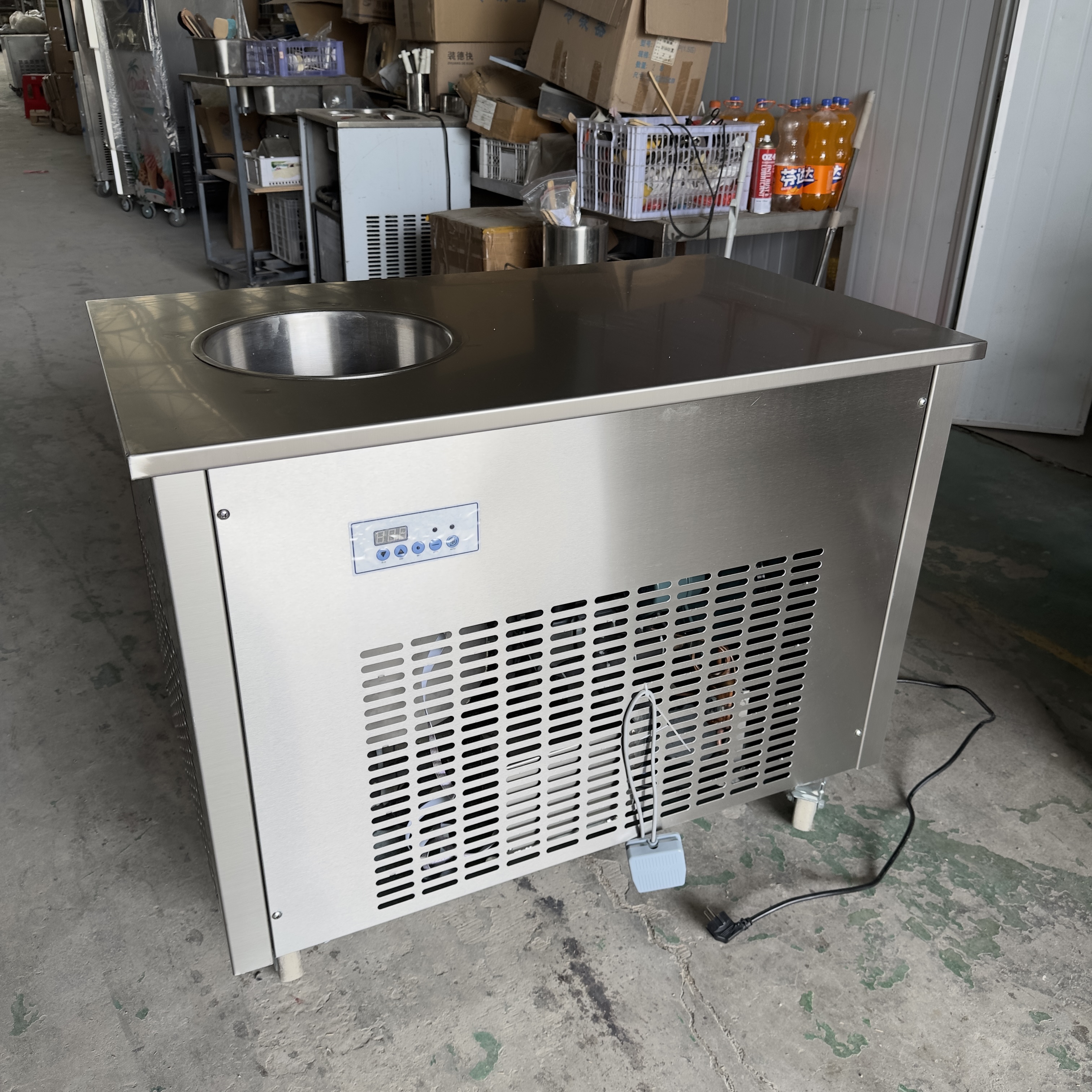
The number of freezing cylinders is one of the most visible differences between commercial Turkish ice cream machines.
A single-cylinder machine may be suitable for a small shop, startup business, or operation with moderate batch requirements.
A double-cylinder machine provides two working cylinders, allowing operators to organize production across two batches.
However, double-cylinder equipment generally requires more components and can involve higher purchasing and operating costs.
Comparison | Single-Cylinder Machine | Double-Cylinder Machine |
|---|---|---|
Cylinder Quantity | 1 | 2 |
Initial Investment | Generally lower | Generally higher |
Production Flexibility | One cylinder | Two cylinders |
Space Requirements | Usually more compact | Depends on model |
Typical Buyers | Small shops, startups | Growing businesses, commercial operators |
Maintenance | Fewer cylinder assemblies | More components to maintain |
Buyer Tip: Do not assume that a double-cylinder machine automatically produces twice as much ice cream. Compare actual batch sizes, freezing times, and production performance under the same conditions.
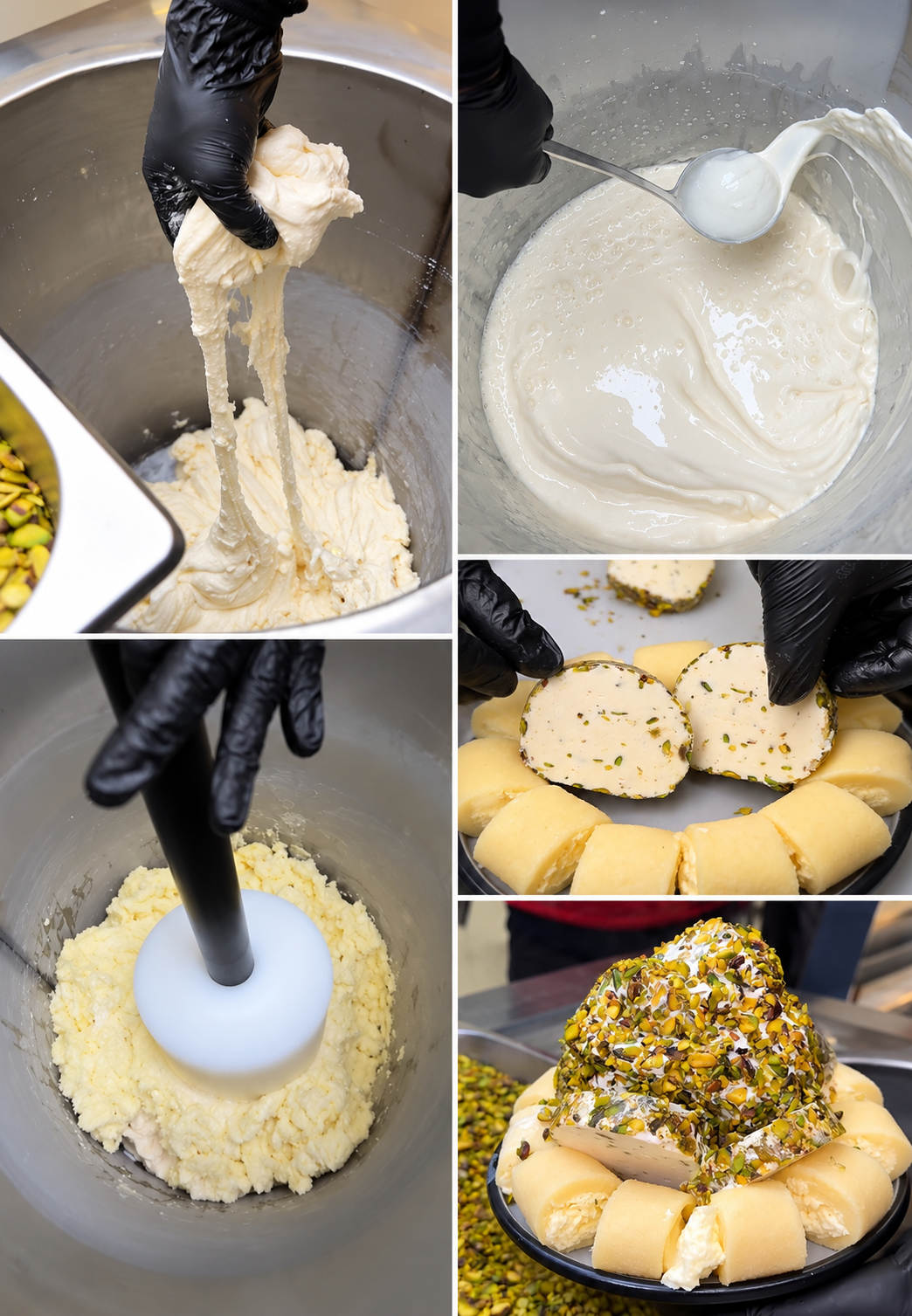
Cylinder dimensions affect the machine's physical size and potential batch capacity.
For example, a larger freezing cylinder can accommodate more mixture than a smaller cylinder of comparable design.
However, nominal cylinder volume is not the same as the recommended mixture loading volume or finished ice cream output.
Adequate space may be needed for mixing, expansion, and safe operation.
When comparing machines, ask suppliers for:
Inner cylinder diameter and depth
Recommended mixture loading quantity
Approximate batch processing time
Product output under specified test conditions
Suitable recipes and product applications
A larger cylinder is not always a better investment.
The most suitable capacity depends on your daily sales forecast, working schedule, and available operating space.
The compressor is an important component of the machine's refrigeration system.
Different compressor configurations can affect purchasing costs, power requirements, and cooling performance.
Some manufacturers offer different compressor brands or refrigeration configurations depending on the machine model.
When evaluating a quotation, buyers should ask:
What compressor brand and model are included?
What is the rated refrigeration configuration?
Which refrigerant is used?
What electrical supply is required?
Can the supplier provide a working demonstration?
What happens if the compressor requires replacement?
A more expensive compressor does not automatically guarantee better ice cream.
The refrigeration system must be appropriately matched with the machine's cylinder size, product formulation, and intended operating conditions.
Turkish dondurma is known for its dense and elastic texture.
The production process can place different demands on the mixing system compared with some lighter frozen desserts.
The suitability of the motor, mixing components, and mechanical construction should therefore be considered carefully.
Ask suppliers whether their equipment has been tested with a recipe similar to your intended product.
Evaluate the machine's mixing performance, construction, access for cleaning, and maintenance requirements.
Important: Traditional stretchy texture depends heavily on the recipe and processing method. Machine power alone cannot guarantee authentic dondurma results.
Different machines may include different operating features.
For example, some commercial Turkish ice cream machines use a defrosting mechanism to help manage the frozen product during operation.
Additional features may affect both the equipment price and the operator's workflow.
Depending on the model, buyers may need to compare:
Defrosting mechanism
Temperature control options
Control panel configuration
Cylinder arrangement
Compressor choices
Accessories and spare parts
Always confirm which features are included in the standard quotation and which require an additional charge.
JINLISHENG manufactures commercial Turkish ice cream equipment for different production requirements.
Its Turkish ice cream machine range includes single-cylinder and double-cylinder configurations.
The following overview can help buyers identify which models to investigate.
Model | Cylinder Configuration | Cylinder Dimensions | Suggested Buyer Profile |
|---|---|---|---|
TS-30 | Single cylinder | Ø30 × 43 cm | Small shops and startups |
TS-60 | Double cylinder | 2 × Ø30 × 43 cm | Shops needing two working cylinders |
TS-80 | Double cylinder | 2 × Ø40 × 50 cm | Operators evaluating larger cylinders |
TS-90 | Triple cylinder | 2 × Ø20 × 43 cm | Larger-scale commercial applications |
Cylinder dimensions are nominal specifications. Recommended loading quantity and actual output must be confirmed for each machine and recipe.
The TS-30 uses a single-cylinder configuration.
For entrepreneurs starting a small Turkish ice cream business, it may be a practical model to evaluate when space and initial equipment investment are important considerations.
Before purchasing, confirm its electrical configuration, compressor option, usable batch quantity, and intended production schedule.
The TS-60 provides two freezing cylinders.
This arrangement may be useful for businesses that want greater flexibility in organizing batches or require two working cylinders.
Compare its operating requirements and total cost with a single-cylinder machine before choosing.
The TS-80 and TS-90 offer larger double-cylinder configurations.
These models are worth considering when smaller equipment cannot accommodate the intended batch requirements.
However, cylinder dimensions alone should not be used to predict hourly output.
Request actual production data and a demonstration using the intended product formulation.
Need help comparing TS-30, TS-60, TS-80, and TS-90?
Contact JINLISHENG for model-specific specifications, available options, working videos, and a quotation based on your destination country.
A low purchase price is attractive, especially for a startup.
However, two machines with different prices may not offer equivalent specifications or ownership costs.
Consider the following comparison.
Evaluation Factor | Questions to Ask |
|---|---|
Compressor | What brand, model, and configuration are included? |
Cylinder | What are the dimensions and recommended loading limits? |
Motor | Is the mixing system suitable for the intended recipe? |
Materials | What materials are used for product-contact components? |
Refrigeration | Can performance be demonstrated under defined conditions? |
Features | Is defrosting or temperature control included? |
Warranty | What is covered, and for how long? |
Spare Parts | What replacement parts are available? |
Documentation | Are manuals and applicable compliance documents available? |
Do not assume that a low-priced machine is poor quality or that an expensive machine is automatically superior.
Ask for specifications, evidence of performance, and transparent quotations.
Imagine that your equipment stops operating during a busy weekend.
Even if the machine was inexpensive to purchase, an unexpected breakdown may cause lost sales, wasted ingredients, and repair expenses.
For this reason, assess the total cost of ownership:
Total Cost of Ownership = Purchase Price + Shipping + Import Charges + Installation + Energy + Maintenance + Repairs
This calculation can be more useful than comparing purchase prices alone.
For overseas buyers, the manufacturer's equipment price is only one part of the purchasing budget.
You also need to consider freight, import taxes, and delivery arrangements.
Different trade terms assign different responsibilities to the buyer and seller.
Trade Term | General Meaning |
|---|---|
EXW | The buyer takes on extensive collection, export, and transport responsibilities |
FOB | Used for sea or inland waterway transport; seller delivers goods on board at the named port |
CIF | Includes cost, insurance, and freight to the named destination port, with risk transfer occurring earlier |
DDP | Seller bears extensive delivery, import-clearance, and duty responsibilities |
The actual quotation should identify the named place or port and the applicable Incoterms version.
Import duties and taxes are not automatically included in a CIF price.
Buyers should obtain a clear breakdown of transportation and destination charges.
A manufacturer or freight forwarder may ask for:
Destination country
Delivery city, address, or destination port
Machine model and quantity
Preferred shipping method
Required delivery terms
Any special handling requirements
Machine packaging dimensions and shipment weight are also necessary for a reliable freight quotation.
Practical Advice: When comparing different suppliers, request quotations on the same delivery basis. An EXW quotation and a delivered quotation should not be compared as though they include identical services.
Some buyers choose to work directly with a factory rather than purchasing through a trading company or local distributor.
Factory-direct sourcing can offer advantages for buyers who need specific configurations or bulk orders.
Potential benefits include:
Direct technical communication
Access to available machine configurations
OEM/ODM discussions
Production-related information
Consolidated equipment purchasing
Spare-parts coordination
However, purchasing directly from a factory also requires careful supplier evaluation.
Check the manufacturer's actual capabilities and after-sales procedures before placing an order.
JINLISHENG is a China-based ice cream machinery manufacturer with more than 20 years of manufacturing experience.
Its product portfolio includes Turkish ice cream machines, soft serve equipment, hard ice cream machines, gelato equipment, and popsicle machines.
The company supports OEM/ODM inquiries and supplies equipment to international markets.
Buyers can contact the team to discuss available equipment configurations, customization, and international transportation.
Instead of simply purchasing the lowest-priced model, start with the requirements of your business.
How many servings do you expect to sell?
Will your business operate for a few hours each day, or during long commercial service periods?
Use realistic estimates rather than maximum theoretical production figures.
Estimate the quantity of product needed during peak operating periods.
Ask the supplier how much mixture the machine can process per batch and how long the process takes.
Confirm the voltage, frequency, electrical phase, plug, and installation requirements for your market.
Never assume that a machine configured for one country can be connected directly to the electrical supply in another.
If possible, request a video or factory trial using a recipe comparable to your intended product.
Ask the manufacturer to explain the test conditions and the resulting production quantity.
Make sure you know what is included:
Machine and standard accessories
Optional compressor or control upgrades
Export packaging
Spare parts
Warranty terms
Shipping and delivery conditions
A complete quotation helps you avoid unexpected costs.
Before paying a deposit, review the following items:
Checklist Item | Confirmed? |
|---|---|
Correct machine model | Yes / No |
Cylinder dimensions | Yes / No |
Recommended mixture capacity | Yes / No |
Compressor brand and configuration | Yes / No |
Electrical specifications | Yes / No |
Included accessories | Yes / No |
Available certification documents | Yes / No |
Warranty and after-sales terms | Yes / No |
Spare-parts arrangements | Yes / No |
Delivery terms and freight | Yes / No |
Production lead time | Yes / No |
Working demonstration | Yes / No |
This checklist can be particularly helpful for equipment importers, new ice cream shop owners, and distributors comparing multiple manufacturers.
There is no reliable universal average that applies to every commercial configuration. Prices depend on cylinder quantity, capacity, compressor, materials, features, and shipping terms. Request current quotations for comparable models.
Generally, a double-cylinder machine involves more components and a higher initial purchase cost, although individual configurations and supplier pricing may vary.
Yes. International buyers can contact manufacturers or exporters in China, subject to destination-country import and compliance requirements. Request technical details, commercial terms, and documentation before ordering.
A single-cylinder model may be suitable for a smaller operation, depending on production demand, budget, and available space. The TS-30 is one option to evaluate, but its suitability should be confirmed against your actual operating needs.
Not necessarily. Larger cylinders can accommodate greater quantities, but actual hourly output depends on recommended loading volume, freezing time, refrigeration performance, and the recipe.
Not always. The quotation may be EXW, FOB, CIF, or another agreed term. Confirm the named destination, shipping coverage, duties, and additional charges.
JINLISHENG accepts OEM/ODM inquiries. The availability and cost of individual customization requests depend on the machine model and technical feasibility.
Provide your required model or production capacity, destination country, power supply specifications, purchase quantity, and any customization requirements.
When choosing a Turkish ice cream machine, the purchase price is important, but it should not be the only factor.
Cylinder size, refrigeration performance, electrical compatibility, construction, spare-parts availability, and after-sales service all influence the value of your investment.
For new entrepreneurs, selecting appropriate equipment can also help avoid unnecessary spending on features or production capacity they do not need.
If you are still planning your business, read our related guide: How to Start a Turkish Ice Cream Business in 2026: Equipment, Costs & Profit.
Looking for a reliable Turkish ice cream machine manufacturer in China?
JINLISHENG offers commercial ice cream equipment for ice cream shops, startups, equipment importers, and distributors.
Our team can help you explore:
TS-30, TS-60, TS-80, and TS-90 configurations
Single-cylinder and double-cylinder machine options
Available compressor and electrical configurations
OEM/ODM requirements
Equipment specifications and product videos
International shipping quotations