- All
- Product Name
- Product Keyword
- Product Model
- Product Summary
- Product Description
- Multi Field Search
Views: 1 Author: Site Editor Publish Time: 2026-10-21 Origin: Site


What if one of the most interesting ice creams in the world wasn't a colorful soft-serve cone or an expensive gelato creation, but a traditional frozen dessert made with milk, a few fragrant ingredients, and a remarkable preparation method?
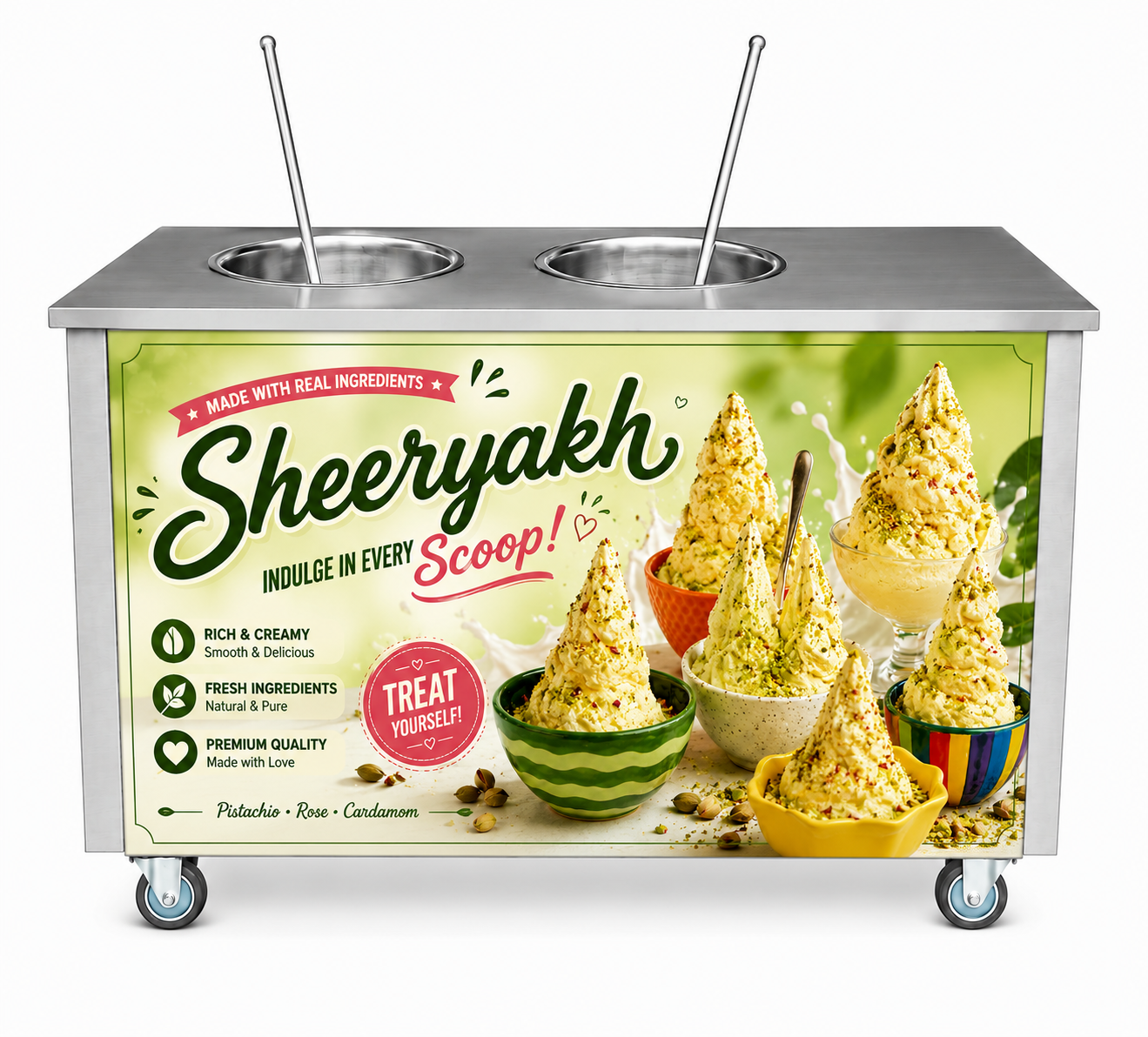
Meet Afghan Shir Yakh, also known as Sheer Yakh or Sheeryakh.
For generations, this traditional Afghan ice cream has been enjoyed during warm summer days, family gatherings, and visits to local dessert shops.
Now, it is attracting interest beyond its traditional home, offering curious food lovers a different kind of frozen dessert experience.
Its appeal is easy to understand: rich milk flavor, delicate aromas, a dense and creamy texture, and a preparation tradition that tells a story.
But what exactly makes Shir Yakh special? Why are people interested in discovering it? And could this traditional dessert inspire a new small business?
Let's explore the story behind Afghan ice cream.
Afghan Shir Yakh appeals to food lovers because it combines a distinctive texture, traditional milk-based recipes, fragrant ingredients such as cardamom and rosewater, and a strong connection to Afghan food culture.
Its traditional hand-churning process also makes it visually interesting.
For Afghan communities living abroad, Shir Yakh can offer a familiar taste of home. For people discovering Afghan cuisine for the first time, it provides an opportunity to try something different from conventional ice cream.
Regional food coverage, including reports of its popularity in Quetta, Pakistan, shows that this traditional dessert can attract customers outside Afghanistan.
However, growing interest in particular communities does not necessarily mean demand is increasing in every country.
Shir Yakh, also written as Sheer Yakh or Sheeryakh, is a traditional Afghan frozen milk dessert.
The name is commonly translated as "cold milk."
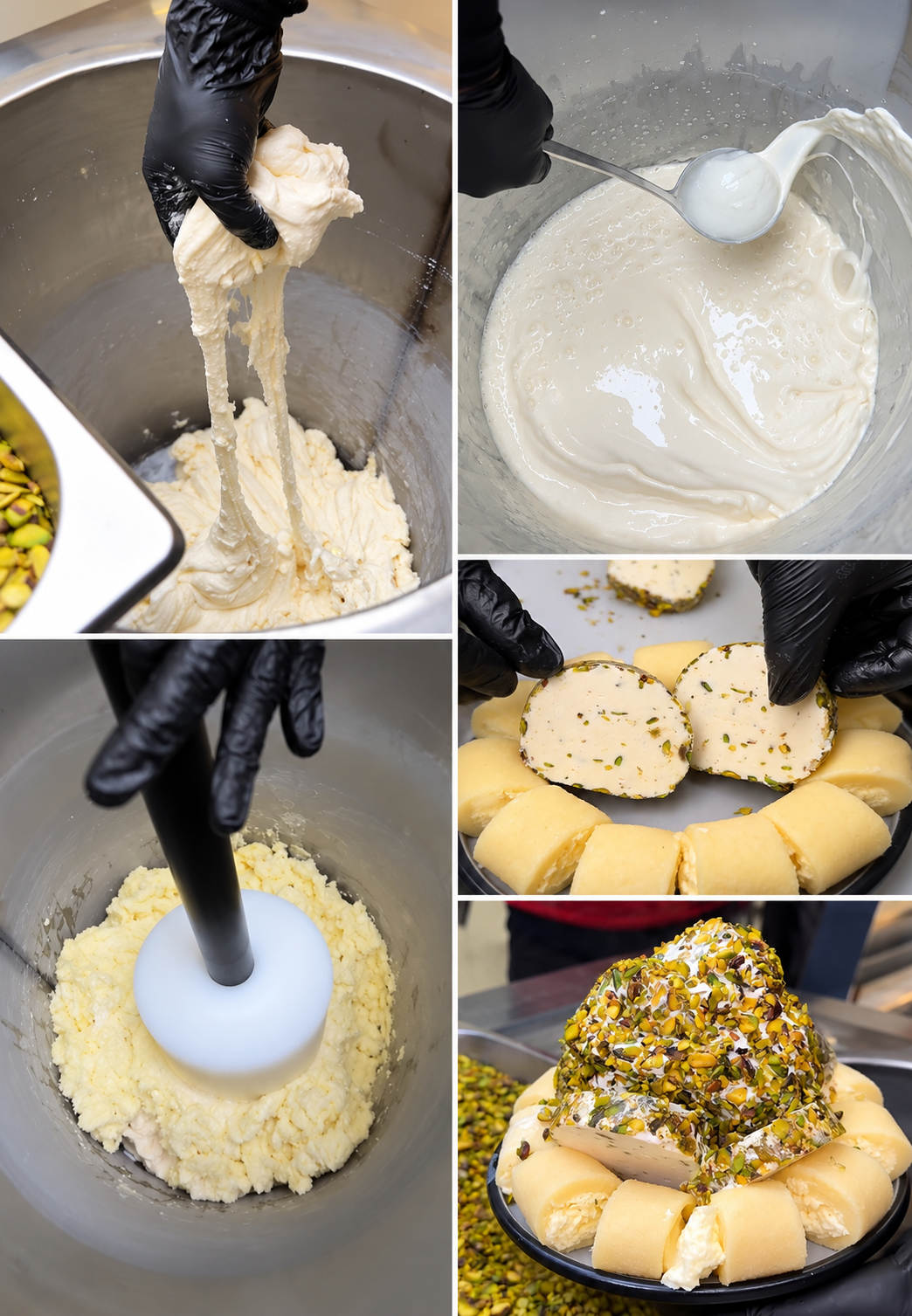
Unlike many commercially manufactured ice creams, traditional Shir Yakh is often associated with a hands-on preparation process.
A milk-based mixture is placed inside a metal container surrounded by ice and salt. The container is rotated, and the mixture is worked as it freezes.
This process helps develop the dessert's characteristic dense and creamy consistency.
Traditional flavor combinations may include:
Milk and sugar
Cardamom
Rosewater
Pistachios
Almonds
Saffron in some variations
Recipes vary between families, regions, and individual makers.
One of Shir Yakh's greatest attractions is that it does not need an elaborate collection of artificial-looking toppings to be memorable.
Its distinctive flavor and preparation method are part of the experience.
One of the first things people notice when tasting Afghan Shir Yakh is its texture.
Many traditional versions are dense, smooth, and rich, with a mouthfeel different from light, highly aerated commercial ice cream.
A major factor is the preparation method.
Traditional hand-churning can incorporate relatively little air compared with some commercial ice cream processes.
The composition of the milk mixture, freezing conditions, and mixing technique also affect the final result.
This creates a dessert that can feel substantial and creamy rather than light and fluffy.
Not exactly.
Afghan Shir Yakh and Turkish dondurma are different traditional desserts, even though some recipes and preparation techniques share similarities.
Feature | Afghan Shir Yakh | Turkish Dondurma |
|---|---|---|
Cultural Origin | Afghanistan | Turkey |
Typical Texture | Dense, creamy, sometimes slightly chewy | Often dense, elastic, and stretchy |
Traditional Preparation | Frequently associated with hand-churning in an ice-and-salt container | Uses distinctive ingredients and texture-development methods |
Common Flavors | Cardamom, rosewater, pistachio | Milk-based flavors and regional varieties |
Serving Experience | Traditional dessert-shop and street-food serving | Often associated with theatrical serving performances |
The actual characteristics depend on the recipe.
Afghan Shir Yakh should be appreciated as its own dessert, rather than described simply as another version of Turkish ice cream.
Sometimes the most memorable desserts are built around simple combinations.
Shir Yakh is a good example.
Instead of depending entirely on chocolate sauces or brightly colored flavorings, traditional Afghan ice cream often features subtle, aromatic ingredients.
Cardamom adds a recognizable fragrance that helps distinguish many South and Central Asian desserts.
In Shir Yakh, it can complement the sweetness and richness of the milk base.
Rosewater is another ingredient found in some Shir Yakh recipes.
Used in suitable amounts, it adds a delicate floral note.
For people unfamiliar with rosewater desserts, the flavor may feel unusual at first, but that difference can become part of the appeal.
Chopped pistachios and almonds are popular toppings.
They introduce contrasting texture while giving the finished dessert an attractive, traditional appearance.
Many ice cream shops compete by introducing more varieties of familiar flavors.
A Shir Yakh business can take a different approach: focus on a recognizable traditional product and make the quality of its core ingredients part of its identity.
For small business owners, this creates an opportunity to develop a focused menu rather than offering dozens of unrelated products.
Food is closely connected to culture, identity, and memory.
For many Afghans, Shir Yakh is more than a cold dessert.
It may remind them of summer afternoons, family visits, neighborhood ice cream shops, and childhood experiences.
This emotional connection is particularly meaningful for communities living outside Afghanistan.
Afghan restaurants, cafés, and dessert businesses abroad can introduce traditional foods to people who miss familiar flavors.
A dessert like Shir Yakh may have particular appeal because it is associated with shared cultural experiences.
For a new food business, this suggests one possible audience: customers looking for authentic Afghan desserts.
However, the size of that potential customer base should be evaluated locally.
Customers who have never visited Afghanistan may be interested in trying regional specialties they have not encountered before.
Shir Yakh offers a story that is easy to explain:
A traditional Afghan ice cream made through a distinctive freezing and mixing process, often served with fragrant spices and nuts.
That story can help customers understand what makes the dessert different.
Afghan Shir Yakh has a long history, so it would be inaccurate to describe it as a newly invented dessert.
What is interesting is how traditional foods can find audiences in new locations.
In October 2025, Youlin Magazine published a report describing the popularity of Sheer Yakh in Quetta, Pakistan.
The report highlighted its availability in different parts of the city and its role as a refreshing summer dessert.
This is an example of a traditional Afghan specialty attracting customers outside Afghanistan.
It does not establish a worldwide sales boom, but it shows how culturally distinctive desserts can become part of local food scenes beyond their original regions.
The traditional production process offers interesting visual moments.
A maker rotating a metal ice cream container, working the mixture, or decorating the finished dessert creates content that can explain the product without complicated advertising.
Short videos can introduce the preparation method to viewers who have never heard of Shir Yakh.
For small businesses, this provides a practical content idea:
Show real ingredients, demonstrate the preparation, and explain the cultural background.
A well-presented story may attract interest, although social media attention alone does not guarantee paying customers.
Imagine opening a small dessert stand specializing in authentic Afghan ice cream.
Instead of competing directly with every soft-serve shop, your business introduces a product with its own heritage, flavor, and serving style.
This approach may appeal to entrepreneurs looking for a specialized food concept.
A small menu could feature traditional Shir Yakh alongside carefully developed flavor variations.
Examples might include:
Traditional milk and cardamom
Rosewater and pistachio
Saffron milk ice cream
Almond and cardamom
Seasonal specialty flavors
These are menu development ideas, not a claim that every variation is a traditional Afghan recipe.
Depending on local regulations and demand, Shir Yakh may be suitable for:
Small dessert shops
Shopping mall kiosks
Food markets
Cultural festivals
Restaurants offering Afghan cuisine
Takeaway dessert counters
Each business model has different requirements for investment, refrigeration, hygiene, and staffing.
Customers may be interested in learning where Shir Yakh comes from and how it is made.
Businesses can use menus, photographs, and short videos to explain its origins.
Presenting its cultural identity respectfully may help distinguish the product from generic frozen desserts.
A potential business could serve Afghan communities familiar with Shir Yakh while introducing the dessert to customers exploring unfamiliar cuisines.
The important question is whether enough customers in the selected location are willing to purchase it regularly.
That question should be answered through research and small-scale product testing, not assumptions.
It is possible for a Shir Yakh business to generate profit, but profitability depends on customer demand and operating costs.
The ingredients themselves may be relatively simple, but this does not mean production or running the business is automatically inexpensive.
Rent, labor, refrigeration, equipment, packaging, and product waste can have a major effect.
The following is a hypothetical example in US dollars, not real customer sales data.
Item | Illustrative Amount |
|---|---|
Selling Price per Serving | $4.00 |
Ingredients and Packaging | $1.20 |
Contribution per Serving | $2.80 |
Servings Sold per Day | 60 |
Daily Revenue | $240 |
Daily Contribution Before Fixed Costs | $168 |
In this example, the business earns $168 in daily contribution before rent, labor, utilities, taxes, equipment depreciation, maintenance, and other expenses.
That is not net profit.
Suppose a business has hypothetical fixed costs of $2,800 per month.
With a contribution of $2.80 per serving:
Monthly Break-Even Volume = $2,800 ÷ $2.80 = 1,000 servings
If the stand operates 25 days per month, it would need to sell approximately 40 servings per day to cover those assumed fixed costs.
Actual results will depend on local pricing, customer traffic, ingredient costs, staffing, seasonal demand, and other factors.
This type of calculation is useful before investing in equipment or renting a location.
Traditional Shir Yakh preparation has cultural and culinary value.
However, producing frozen desserts by hand can require significant labor and attention.
For someone serving a larger number of customers, maintaining consistent batch quality and planning production time can become important operational challenges.
Hand-churning may be suitable for demonstrations, limited production, or businesses built around the traditional process.
Commercial equipment may help some operators manage production tasks more efficiently.
But a machine should not be assumed to reproduce authentic Shir Yakh automatically.
Different machine designs affect aeration, mixing, freezing, and texture.
Before buying equipment, entrepreneurs should test whether the machine can produce their intended recipe and meet their production requirements.
Consider:
The recipe and desired finished texture
Recommended batch capacity
Freezing and mixing performance
Electrical requirements
Cleaning and sanitation procedures
Availability of spare parts
Warranty and technical support
Actual production demonstrations
For a new small business, buying equipment based on realistic sales expectations can be more sensible than choosing the largest available machine.
If the idea interests you, begin with a practical plan.
Identify potential customers and competing dessert shops.
Determine whether there is existing demand for Afghan desserts or an opportunity to introduce something new.
Work on a consistent flavor and texture.
If you intend to advertise the product as traditional Shir Yakh, pay particular attention to ingredient authenticity and preparation methods.
Estimate the full budget, including:
Ingredients and toppings
Equipment
Refrigerated storage
Packaging
Rent and deposits
Business permits
Electricity and water
Staff and training
Marketing
Working capital
Decide whether traditional hand-production, suitable commercial equipment, or a combination of methods fits your business concept.
A small menu can make it easier to control inventory, maintain product consistency, and understand customer preferences.
Show the ingredients, preparation process, and cultural origins of Shir Yakh.
Give customers a reason to understand and remember your product.
Most importantly, allow real customer feedback to guide decisions about expansion.
Shir Yakh is a traditional Afghan frozen milk dessert often prepared through a hand-churning process and flavored with ingredients such as cardamom and rosewater.
Not exactly. Traditional Shir Yakh often has a dense, rich texture and a characteristic preparation process. Recipes vary, so its final texture may differ from conventional ice cream.
Its distinctive flavors, cultural heritage, traditional preparation method, and appeal to Afghan communities and curious food lovers can help attract interest. Regional reports document its popularity in places such as Quetta, but global growth has not been established.
No. Afghan Shir Yakh and Turkish dondurma are distinct traditional desserts, although some formulations may share similar ingredients or textural characteristics.
Possibly, depending on the recipe, machine capabilities, sales volume, and production schedule. Equipment should be tested for the intended product.
It can be profitable under suitable conditions, but returns are not guaranteed. Business success depends on demand, price, cost control, location, and day-to-day operations.
Depending on the recipe and business model, you may need suitable freezing and mixing equipment, ingredient storage, refrigeration, food-safe utensils, sanitation facilities, and appropriate serving equipment.
Certain commercial freezing and mixing machines may be capable of processing compatible Shir Yakh formulations. However, equipment suitability should be confirmed through recipe-specific tests rather than product names alone.
Afghan Shir Yakh demonstrates how a traditional food can remain meaningful while reaching new audiences.
Its creamy texture, fragrant ingredients, preparation process, and connection to Afghan culture make it distinctive.
For customers, it offers an opportunity to discover a different frozen dessert.
For entrepreneurs, it suggests a business idea that deserves careful research.
The opportunity is not simply to sell ice cream. It is to offer a product with a recognizable identity, consistent quality, and an authentic story.
Whether that idea becomes a successful business depends on local demand, sound financial planning, and reliable production.
JINLISHENG — Commercial Ice Cream Machinery Manufacturer in China
With more than 20 years of manufacturing experience, JINLISHENG supplies commercial ice cream equipment for entrepreneurs, dessert shops, and equipment importers.
Our range includes single-cylinder and double-cylinder freezing and mixing equipment.
For buyers exploring Afghan Shir Yakh production, our team can discuss available machine configurations and evaluate the technical requirements of your intended recipe.
Contact us to ask about:
Available commercial machine models
Cylinder sizes and freezing configurations
Recipe-based equipment suitability
OEM/ODM customization options
Electrical requirements for your country
International shipping quotations
Warranty and after-sales support
Contact JINLISHENG to discuss the equipment requirements for your Afghan Shir Yakh business.